


 English


The Dell PowerEdge R9825 is our lab’s first server built on AMD 6th Gen EPYC and serves as the dual-socket flagship of Dell’s 18th‑generation PowerEdge portfolio. Equipped with two EPYC 9996 CPUs, it delivers 512 Zen 6c cores and 1,024 threads. It has 32 DDR5 slots supporting up to 8TB RAM and front bays for a maximum of 32 E3.S Gen6 x4 NVMe drives. Dell engineered this high-density dual-socket server for conventional air-cooled data centers; its 3U form factor is the key design differentiator beyond its massive core count.

Dell’s mainstream dual-socket servers have used a 2U footprint for a decade, including the R7725, which this model replaces at the top of Dell’s AMD lineup. The extra rack unit creates airflow headroom to cool a pair of 600W processors solely with fans, letting operators deploy 512-core nodes without liquid cooling loops. Our review unit carried two EPYC 9996 CPUs and 2TB of 8,000MT/s DDR5 paired with Solidigm Gen5 E3.S drives.
Key Takeaways
- -512 air-cooled cores in a standard rack chassis. Five hot‑swap fans cool the two 600W EPYC 9996. It scored 9.72 ns/day on GROMACS benchPEP, 1.8× faster than the 2U PowerEdge R7725 with dual 192-core EPYC 9965, and hit 6.8TB/s AES‑256‑GCM encryption throughput.
- -The 3U design prioritizes airflow. Dell stacked the two processor boards vertically and tuned front intake routing to supply balanced airflow to both sockets. Liquid cooling remains optional, so the platform fits existing air-cooled facilities.
- -Memory configuration heavily shapes performance. It supports 32 RDIMMs (8,000MT/s, up to 8TB) or 32 MRDIMMs (12,800MT/s, up to 4TB; launch MRDIMM cap is 2TB). Our RDIMM test unit reached 1,201GB/s on STREAM Triad; the same CPUs on MRDIMMs hit 1,901GB/s on AMD’s reference platform.
- -Full Gen6 I/O stack: up to eight PCIe Gen6 x16 slots, optional Gen6 OCP 3.0, and 16 or 32 E3.S Gen6 bays supporting up to 1.96PB flash storage. This is Dell’s first PowerEdge server where the I/O generation aligns with the host CPU generation.
- -Compared with NVIDIA Vera, the x86 platform leads most workloads. The R9825 outperformed the dual-socket Vera reference system on GROMACS, OpenFOAM, Valkey throughput, 7-Zip and OpenSSL. Vera held advantages in raw memory bandwidth, ClickBench hot sum, single-socket PostgreSQL and MariaDB throughput, plus several low-latency single-thread benchmarks.
Build and Design
The R9825 measures 5.17 inches high, 17.09 inches wide and 34.44 inches deep with the bezel, weighing 94 pounds fully configured. Its depth and weight match loaded 2U dual-socket servers; the increased height is the major deviation. Inside, the two processor boards are stacked vertically, unlike 2U servers that place both sockets side-by-side on one mainboard. This vertical layout creates the thermal margin required for air cooling.
This form factor stems from AMD’s SP7 socket: a 76 mm × 80 mm socket rated for 600W, offering 16 memory channels with one DIMM per channel, designed for 256-core CPUs and the 1.6TB/s MRDIMM bandwidth ceiling. The smaller SP8 socket, arriving in H1 2027, will cap at 400W, 128 cores and eight memory channels with more PCIe lanes per socket. Dell’s upcoming PowerEdge R7825 will fill the volume 2U dual-socket AMD slot below the R9825.
Each processor tier has dedicated intake airflow and a full-height heatsink, with a fan bank behind the drive bays pushing air across both stacked boards. The patterned perforations on the front panel are not cosmetic: the aperture layout is precision-tuned to equalize static pressure between upper and lower CPU tiers to deliver matched airflow. Under heavy sustained loads, the lower CPU ran more than 10°C hotter than the upper CPU due to adjacent power and distribution hardware; this temperature gap narrows at moderate loads and is wider than the spread seen on conventional side-by-side 2U server layouts.
At launch, Dell offers 8 or 16 E3.S Gen6 NVMe front bays (max 983TB). The 32-bay 1.96PB configuration will come later. All storage paths run PCIe Gen6 end-to-end. Boot storage uses a BOSS-N1 or N2 module with two M.2 NVMe SSDs in hardware RAID 1; PERC H975i and H965i RAID controllers are available for front drive arrays. Our test unit used Solidigm 12.8TB Gen5 E3.S drives operating at Gen5 x4 within Gen6 slots.
The rear panel hosts up to eight PCIe Gen6 x16 slots plus one Gen4 x4 OCP 3.0 slot, or an optional pair of Gen6 x8 OCP slots. Accelerator support is modest by design: up to six 75W single-wide half-length cards, or up to two 675W double-wide full-length cards (supported only in single-CPU builds). This positions the R9825 as a CPU-first platform optimized for NICs, DPUs and lightweight inference, while heavy GPU workloads route to Dell’s XE server line. Rear ports include a dedicated 1GbE BMC port, two USB 3.1 Type‑A ports and VGA; front ports include optional USB 2.0 Type‑A, USB‑C and mini DisplayPort.
Hot‑swap redundant titanium power supplies span 1,500W to 3,200W, with AC, HVDC and -48V DC variants. A full configuration with two 600W CPUs, 32 DIMMs and 32 NVMe drives typically calls for 3,200W supplies. Cooling uses up to five hot‑swap fans, with direct liquid cooling as an option. Dell’s thermal validation confirms air cooling support for all listed CPUs at inlet temperatures up to 35°C with high-performance fans. At 40°C air inlet, CPUs remain air-cooled but MRDIMMs, 96GB+ RDIMMs and GPUs lose air-cool qualification. At 45°C inlet, all 300W+ CPUs require direct liquid cooling. AMD’s Venice platform also adds three power controls: a shared SoC and DIMM power budget, utilization-aware power scaling tied to active core count, and per-core-group frequency floors to create multiple performance tiers from one processor SKU.
Dell PowerEdge R9825 Specifications
| Specification | Dell PowerEdge R9825 |
|---|---|
| Form Factor | 3U rack server; 5.17 × 17.09 × 34.44 in (131.3 × 434.0 × 874.9 mm) with bezel; 94.01 lb (42.64 kg) |
| Processors | Dual 6th Gen AMD EPYC 9006 (SP7), up to 256 cores per socket |
| DIMM Slots | 32 DDR5 |
| RDIMM Support | Up to 8TB, up to 8,000MT/s |
| MRDIMM Support | Up to 4TB, up to 12,800MT/s; 128GB modules unavailable at launch |
| Front Storage Bays | 16× E3.S Gen6 NVMe (max 983.04TB, launch); 32× E3.S Gen6 NVMe (max 1.96PB, post-launch) |
| RAID Controllers | PERC H975i, PERC H965i |
| Boot Storage | BOSS-N1 / BOSS-N2, hardware RAID 1 with 2× M.2 NVMe |
| PCIe Slots | Up to 8× PCIe Gen6 x16 |
| OCP | 1× OCP 3.0 Gen4 x4; optional 2× OCP Gen6 x8 |
| Accelerator Limits | Up to 2× 675W double-wide FHFL (single-CPU only); up to 6× 75W single-wide FHHL |
| Front Ports | Optional USB 2.0 Type‑A, USB‑C, mini DisplayPort |
| Rear Ports | 1× 1GbE BMC, 2× USB 3.1 Type‑A, VGA |
| Power Supplies |
1,500W / 1,800W / 2,400W / 3,200W AC/HVDC; 1,400W -48V DC; hot‑swap redundant, Titanium-rated AC models |
| Cooling | Air cooling with up to 5 hot‑swap fans; optional direct liquid cooling |
| Management |
iDRAC10, iDRAC Direct, Redfish REST API, RACADM CLI, iDRAC Service Module, Dell update utilities |
| Security |
Signed firmware, SED support, Secure Boot, Secured Component Verification, Secure Enterprise Key Manager, post-quantum cryptography ready |
| Supported OS | Ubuntu Server LTS, RHEL, SLES, VMware ESXi, Windows Server |
| Rails | ReadyRails II sliding (optional CMA / SRB), combo rails, static ReadyRails |
Management and Security
Management runs on iDRAC10 with front-panel iDRAC Direct, Redfish API, RACADM and Dell’s full suite of update tools. Security features include signed firmware, self-encrypting drive support, Secure Boot, supply-chain component attestation and enterprise key management, with post-quantum cryptography readiness. Our review unit shipped with iDRAC10 Enterprise firmware 2.00.05.10. While web interface load speeds improved over iDRAC9, several hardware visualization views were replaced by generic dropdown menus. Sensor readouts correctly identified the dual EPYC 9996 CPUs, 64GB 8,000MT/s dual-rank DIMMs and Gen6 NVMe link negotiation on the Micron 9650 E3.S drive.
Performance
Benchmarks compare the R9825 against three internal lab systems: its 2U predecessor R7725, the dual-socket NVIDIA Vera reference platform and Intel’s PowerEdge R770AP. Two additional AMD SP7 reference configurations were tested remotely via SSH for MRDIMM performance guidance. All Venice and Vera systems ran Ubuntu 26.04 with GCC 15.2; the older R7725 and R770AP used Ubuntu 24.04 and GCC 13.3, creating a minor compiler disadvantage.
Memory bandwidth defines the R9825’s workload sweet spot. With 8,000MT/s RDIMMs, STREAM Triad hit 1,201GB/s (SMT off), 1.9× the R7725 result. Vera’s LPDDR5X reached 2,073GB/s, while the same EPYC 9996 pair on 12,800MT/s MRDIMMs achieved 1,901GB/s. Local memory latency was 87.6ns at 2MB pages, the lowest among the test group.
HPC workloads benefit strongly from the 512 cores and 16 memory channels per socket. On GROMACS benchPEP, the R9825 hit 9.72 ns/day, 1.8× faster than the R7725 and 4.7× faster than Vera. The large 22.6‑million-cell OpenFOAM CFD case finished in 1,036 seconds; switching to MRDIMMs cut runtime by 21% to 815 seconds.
Key-value workloads scale well with core count. One 256-core EPYC socket delivered 76.5M Valkey GET and 74.2M SET requests per second, outperforming a single 192-core EPYC 9965 socket by 27% and 65% respectively. ClickBench results were mixed: hot sum performance capped below 192 cores and favored Vera, while cold sum results were comparable to Vera and far ahead of the R7725.
For compression and crypto, the R9825 delivered 2,034 GIPS compress and 3,400 GIPS decompress on 7-Zip, and 6.8TB/s AES‑256‑GCM throughput. Single-thread Zen 6c frequency also improved over Zen 5c and Vera’s Olympus cores. Workloads sensitive to excessive logical CPU count, such as JVM and scheduler benchmarks, penalized the 1,024-thread configuration. Vera also held an advantage in inter-socket bandwidth via NVLink‑C2C, making NUMA-aware tuning critical for the R9825.
OLTP testing on HammerDB showed a single EPYC 9996 socket peaked at 2.39M MySQL NOPM, 2.60M VillageSQL NOPM, 2.26M MariaDB NOPM and 2.61M PostgreSQL NOPM. It beat Vera on MySQL, matched on VillageSQL and trailed slightly on PostgreSQL and MariaDB. At matched load, the R9825 produced 30–51% lower p99 tail latency across all tested database engines.
Conclusion
The PowerEdge R9825 is the air-cooled dual-socket platform AMD’s 256-core Venice CPU needed. Dell moved its flagship AMD server to 3U, stacked the processor boards and optimized front-side airflow to run dual 600W CPUs on fans alone. It doubles the R7725’s HPC throughput, improves compression and key-value performance by 27–65%, and integrates PCIe Gen6 end-to-end.
Memory selection is the most impactful configuration choice. RDIMMs maximize capacity up to 8TB, while MRDIMMs trade total capacity for nearly 1.9TB/s bandwidth, which drastically accelerates memory-bound CFD and HPC jobs. Workloads with heavy cross-thread synchronization may perform better on lower-core Venice SKUs within the same chassis.
The 3U footprint reduces core density per rack unit for core-bound workloads. On memory-bound vector and HPC tasks, the taller chassis pays off, with much higher performance per rack unit. Against NVIDIA Vera, the R9825 leads most performance categories but concedes memory bandwidth, certain ClickBench results and some single-socket database throughput. In OLTP testing, it matched Vera’s throughput and delivered substantially better tail latency.
By packing 512 Zen 6c cores, up to 8TB RAM and full PCIe Gen6 I/O into an air-cooled 3U chassis deployable in existing data centers, the Dell PowerEdge R9825 earns our Best Overall Server award.
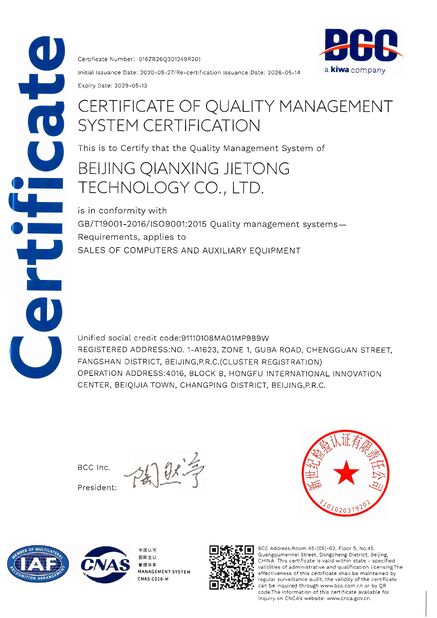
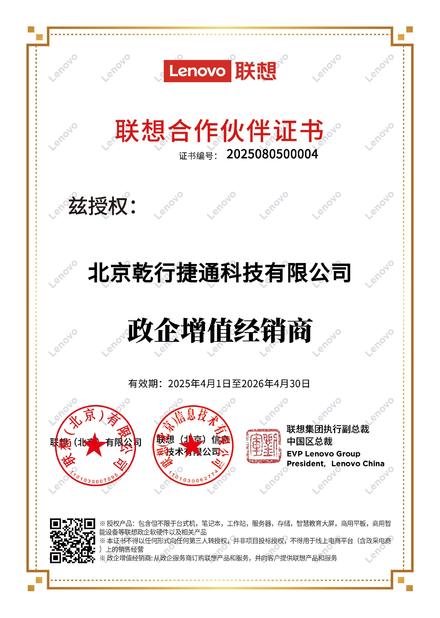
Beijing Qianxing Jietong Technology Co., Ltd.
Sandy Yang/Global Strategy Director
WhatsApp / WeChat: +86 13426366826
Email: yangyd@qianxingdata.com
Website: www.qianxingdata.com/www.storagesserver.com
Business Focus:
ICT Product Distribution/System Integration & Services/Infrastructure Solutions
With 20+ years of IT distribution experience, we partner with leading global brands to deliver reliable products and professional services.
“Using Technology to Build an Intelligent World”Your Trusted ICT Product Service Provider!