


 English


NVIDIA long treated the CPU merely as a companion chip to feed its GPUs in data centers. Its first server CPU, Grace, followed this pattern: built on off‑the‑shelf Arm Neoverse V2 cores and deployed mostly as the CPU component of Grace Hopper and Grace Blackwell superchips. Those superchips introduced NVLink‑C2C, a coherent interconnect delivering far higher cross‑memory bandwidth than PCIe between CPU and GPU.

Vera, Grace’s successor, is far more ambitious. It is a clean‑sheet design powered by Olympus, NVIDIA’s custom Armv9.2 core. Each Vera socket integrates 88 cores and 176 threads. Its standout memory subsystem uses eight SOCAMM2 modules of LPDDR5X, supporting up to 1.5TB per socket with a rated peak bandwidth of 1.2TB/s. This brings the power efficiency of mobile DRAM while retaining field‑replaceable memory. Our dual‑socket test server reached 2,073GB/s on STREAM Triad against a 2.4TB/s combined rating.
Vera’s deployment scope has expanded. It still appears in Vera Rubin superchips, and NVIDIA has added it to BlueField‑4 STX storage platforms and standalone CPU servers for agentic AI sandboxes. Major OEMs, hyperscalers and NCPs including Dell, HPE and Supermicro are launching Vera servers, giving enterprises a third CPU vendor to diversify supply chains.
Key Takeaways
- Memory bandwidth outperforms all tested x86 servers by more than double. The dual‑socket Vera delivered over 2TB/s on STREAM Triad, 2.3× the fastest DDR5 server measured. Even remote memory access across NVLink‑C2C yielded higher bandwidth than local memory on any x86 socket, and hugepage local latency was 13% lower than EPYC 9175F.
- Balanced mid‑market processor. A single 3.4GHz Olympus core achieved 12% higher 7‑Zip compression throughput than the 5.0GHz EPYC 9175F and won two out of three single‑thread Python tests. At full load, Vera hit 63–72% of the EPYC 9965’s 7‑Zip throughput with less than half the core count.
- Vector and crypto are its main weaknesses. Six 128‑bit SVE2 pipelines cannot match 512‑bit AVX‑512 optimized code. On matched 16‑core runs, Vera’s GROMACS benchMEM result was half that of EPYC 9175F and two‑thirds of EPYC 9965. One Vera core ran AES‑256‑GCM encryption at roughly one‑third the speed of the 9175F; the full 384‑core EPYC 9965 led Vera by around 3× on both GROMACS benchPEP and AES.
- Memory‑bound HPC workloads benefit greatly from high bandwidth. On the large OpenFOAM mesh, Vera finished 1.44× faster than the 384‑core EPYC 9965 and 1.20× faster than the 240‑core Xeon 6978P. On the smaller mesh, larger x86 L3 caches narrowed the gap, with Vera within 12% of the 9965.
- Databases and analytics are competitive. In single‑socket HammerDB TPROC‑C, 88 Vera cores beat a 192‑core EPYC 9965 socket by 26% on PostgreSQL and 8% on MariaDB, while trailing by 19% on MySQL and 15% on VillageSQL. The Xeon 6787P lagged Vera across all five database engines. Vera also completed ClickBench hot queries 23% faster than EPYC 9965 and handled 34% more Valkey requests on a 256GB working set.
Specifications
| Specification | NVIDIA Vera CPU |
|---|---|
| Core | NVIDIA Olympus, Armv9.2 with SVE2 and FP8 |
| Cores / threads per socket | 88 cores, 176 threads (NVIDIA Spatial Multithreading) |
| Measured clock speed | 3.41GHz |
| Configurable TDP | 250W–450W |
| Cooling | Air or liquid |
| Cache |
L1-I: 64KB per core L1-D: 96KB per core, 6-way L2: 2MB private per core L3: 164MB per socket, Arm MPAM partitioning |
| Fabric | 2nd-gen Scalable Coherency Fabric, 3.4TB/s bisection bandwidth |
| Memory |
8× SOCAMM2 LPDDR5X modules per socket8× 128-bit controllers (1024-bit aggregate) Up to 9,600MT/s1.2TB/s rated per socket256GB–1.5TB capacity per socket |
| I/O |
PCIe Gen6: 88 lanes per socket (CPU‑only platform), bifurcation supportCXL 3.1 Type 3 memory pooling2nd-gen NVLink‑C2C: 1.8TB/s bidirectional coherent link with authenticated encryption |
| Security | Confidential computing, Arm CCA realms, RME‑DA / RME‑CDA, TDISP, per‑VM keys |
Why NVIDIA Developed Vera
NVIDIA built its data center business around GPUs, then expanded into networking via Mellanox acquisition and software through CUDA and DOCA. It still relied on third‑party general‑purpose CPUs to run OS, prepare data and orchestrate accelerators. Grace marked the first step to break this dependency, but its Neoverse V2 cores left performance gaps versus high‑end x86 CPUs outside AI hosting.
Vera closes much of that gap with custom Olympus cores and upgraded memory bandwidth and capacity. By integrating competitive CPUs alongside GPUs, DPUs and networking, NVIDIA captures more server spend and tightly aligns CPU, memory, interconnect and GPU design. Standalone Vera CPUs also serve agentic AI workloads, where tool calls, code execution and sequential decision‑making demand strong single‑core performance, low latency and predictable throughput.
The Olympus Core
Olympus prioritizes fast single‑task execution and sustained throughput under full socket load. NVIDIA claims a 1.5× IPC uplift over Grace’s Neoverse V2. Its 10‑wide instruction decoder pairs with a neural branch predictor supporting two taken branches per cycle to sustain instruction supply. Out‑of‑order execution and value prediction help resolve dependency chains that limit simple multi‑core scaling.
Execution resources include rich integer units, four load pipelines, two store pipelines and six 128‑bit SVE2 vector pipes; only two of these six handle crypto. The narrower 128‑bit vector design is a deliberate trade‑off against x86 512‑bit AVX‑512. Each core has private 64KB I-cache, 96KB D-cache and 2MB L2, plus a graph prefetcher optimized for irregular pointer‑heavy workloads. Spatial Multithreading lets one physical core run two hardware threads, balancing throughput and predictable latency for agentic workloads.
Fabric, Memory and I/O
Vera’s second‑gen Scalable Coherency Fabric maintains cache coherence across the die with 3.4TB/s bisection bandwidth. Each socket appears as one NUMA node, simplifying local memory placement. The shared 164MB L3 cache can be partitioned via Arm MPAM for QoS isolation between tenants.
The LPDDR5X subsystem delivers high bandwidth at modest power draw, roughly 30–40W for a fully populated memory bank. Capacity tops at 1.5TB per socket, expandable via CXL 3.1 Type 3 memory pooling. The second‑gen NVLink‑C2C interconnect links dual Vera sockets or Vera to Rubin GPUs at 1.8TB/s bidirectional coherent bandwidth.
MGX Vera C2 Reference Server
Our test unit is NVIDIA’s MGX Vera C2, a dual‑socket air‑cooled 2U reference platform for OEM designs. The front panel has eight E1.S NVMe bays and four hot‑swap Delta PSUs; power supplies are front‑loaded, leaving the rear for PCIe risers and management ports. The two Vera CPUs are soldered directly to the PCB without sockets, surrounded by 16 field‑replaceable SOCAMM2 slots. Six central fan modules with foam baffles manage airflow over passive CPU heatsinks.
The modular PCIe riser design improves flexibility but increases service time. Swapping an adapter requires removing the fan cover, foam baffles, cables and the entire riser sled, then disassembling the sled; a routine card swap takes 5–10 minutes and is usually performed on a bench rather than in the rack. Liquid‑cooled variants use cold plates on CPUs while keeping SOCAMM2 modules air‑cooled.
Performance Benchmarks
Vera was tested against five Dell PowerEdge x86 servers running AMD EPYC and Intel Xeon CPUs. Vera used GCC 15 on Ubuntu 26.04.1, while x86 systems ran older toolchains on Ubuntu 24.04. Benchmark binaries and input datasets were consistent.
Memory
Vera hit 2,073GB/s STREAM Triad on dual sockets, 2.3× the best x86 result. Local per‑socket bandwidth reached 1,055GB/s, and NVLink‑C2C remote access sustained 677GB/s. Hugepage local memory latency was 99.2ns, 13% faster than EPYC 9175F, though remote latency rose to 212.7ns and Vera is more sensitive to 4KB page translation overhead.
HPC
GROMACS favors x86 AVX‑512. Vera’s benchPEP result was 1.77 ns/day (SMT off), improving to 2.07 ns/day with Spatial Multithreading. The 384‑core EPYC 9965 finished 3× faster. On the memory‑bound large OpenFOAM mesh, Vera led all testers at 1,854 seconds.
Analytics & Valkey
Vera led ClickBench hot and cold runs at 2.09s and 5.70s. Spatial Multithreading hurt ClickHouse scan performance. For Valkey, Vera lagged on single unbatched requests but pulled ahead on batched workloads with large 256GB working sets, delivering 34% higher throughput than EPYC 9965. Its advantage appears with 8+ core shards, though the higher‑core EPYC fits more shards per socket.
Single‑Thread & Crypto
Olympus led single‑thread 7‑Zip compression at 9,537 MIPS. Its AES performance is weak: one core reached only 6.2GB/s, and the full system hit 1.26TB/s, around one‑third of EPYC 9965. Vera won two of three single‑thread Python benchmarks, helped partially by the newer Python release.
Databases
Single‑socket HammerDB tests showed Vera led PostgreSQL and MariaDB throughput, while EPYC 9965 was faster on MySQL and VillageSQL. Vera’s p99 tail latency was higher on most engines except MariaDB. The newer EPYC 9996 and 9686F trade advantages with Vera across database engines.
Conclusion
Vera is not universally fastest. High‑frequency EPYC parts dominate single‑thread crypto and latency‑sensitive key‑value workloads, while high‑core‑count EPYC leads vector HPC and total throughput jobs. Its strength lies in the broad mid‑range workload space: competitive single‑core integer performance, excellent memory bandwidth and strong results on memory‑bound HPC, analytics and modern databases.
The 2TB/s class memory bandwidth in an air‑cooled dual‑socket server is Vera’s standout differentiator. NVLink‑C2C preserves high cross‑socket bandwidth at the cost of elevated remote latency, so NUMA tuning and hugepages remain important. The main limitation comes from its 128‑bit SVE2 vector pipes, which trail AVX‑512 on optimized scientific and crypto kernels.
A wide OEM ecosystem is rolling out Vera servers for agentic AI, database and analytics deployments. Vera is the first Arm server CPU we have tested that competes directly with top x86 CPUs for general enterprise workloads. AMD’s new EPYC Venice platform has since entered our lab, and side‑by‑side testing with Vera on updated firmware confirms their competitive positioning.
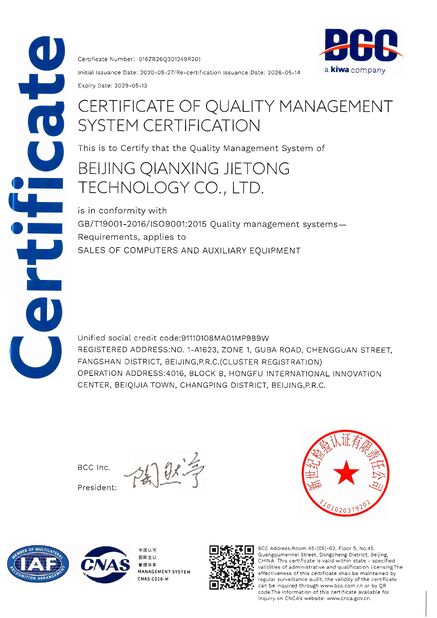
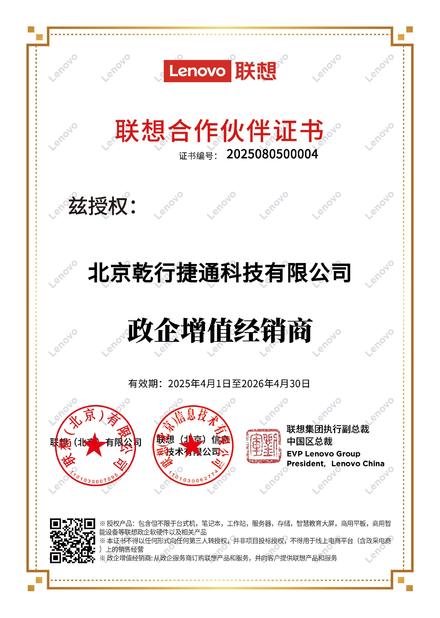
Beijing Qianxing Jietong Technology Co., Ltd.
Sandy Yang/Global Strategy Director
WhatsApp / WeChat: +86 13426366826
Email: yangyd@qianxingdata.com
Website: www.qianxingdata.com/www.storagesserver.com
Business Focus:
ICT Product Distribution/System Integration & Services/Infrastructure Solutions
With 20+ years of IT distribution experience, we partner with leading global brands to deliver reliable products and professional services.
“Using Technology to Build an Intelligent World”Your Trusted ICT Product Service Provider!