


 English


AMD’s 6th Gen EPYC “Venice” family introduces Zen 6 and Zen 6c cores, targeting all server segments with higher core counts, boosted clock speeds, expanded memory capacity and PCIe Gen6. This review covers the SP7 socket, supporting 16 memory channels and processors up to 600W. The enterprise-focused SP8 platform and LPDDR-based Verano are scheduled for 2027. Test data is collected from the 256-core EPYC 9996 on Dell PowerEdge R9825 and AMD’s Nigeria reference platform, which also includes the 96-core, 5.3GHz EPYC 9686F and MRDIMM-12800 memory configurations.

Key Takeaways
- -It is the fastest server processor tested. Dual 256-core EPYC 9996 on Dell PowerEdge R9825 runs GROMACS benchPEP 1.8× faster than the 384-core EPYC 9965 server, resolves large OpenFOAM meshes 2.6× faster, and hits AES-256-GCM encryption throughput of 6.8TB/s (1.7× faster). A single socket delivers 76.5M Valkey GET requests per second.
- -Venice outperforms Vera and Xeon 6978P on most compute workloads. Compared with Vera, the R9825 achieves 4.7× higher benchPEP performance, 5.4× faster encryption, 2.1× better 7-Zip compression, 1.8× faster OpenFOAM solving, and 3.4× higher Valkey throughput; it also reduces HammerDB tail latency by 30%–51% under equal load. Against Xeon 6978P, it leads benchPEP by 2.6× and AES encryption by 2.7×.
- -Per-core x86 performance has improved. On 16 matched cores, Zen 6c runs GROMACS benchMEM 67% faster than Zen 5c and 2.5× faster than Olympus. A single Zen 6c thread delivers 16% faster 7-Zip compression and 2.9× faster encryption than Olympus. The 5.3GHz EPYC 9686F beats Vera on all three Python benchmarks with 10%–38% shorter runtime.
- -Memory bandwidth carries equal weight with core count. Upgrading dual 9996 CPUs from DDR5-8000 to MRDIMM-12800 lifts STREAM Triad bandwidth by 58% and cuts large OpenFOAM solve time by 21%. The 96-core 9686F with MRDIMMs approaches 2TB/s bandwidth and finishes the same mesh within 13% of the 512-core DDR5-8000 R9825.
- -Vera retains advantages in raw bandwidth and inter-socket links. At DDR5-8000, Venice’s STREAM Triad result is 42% lower than Vera’s 2,073GB/s; the gap narrows to 8% with MRDIMMs, and Venice surpasses Vera once uncounted write-allocate reads are included. NVLink-C2C provides 4.6× higher cross-socket bandwidth than AMD xGMI and delivers unmatched CPU-to-GPU bandwidth for x86 platforms.
- -Database results are mixed. In HammerDB testing, one 256-core EPYC 9996 socket beats Vera’s 88-core socket by 14% on MySQL and ties on VillageSQL, while Vera leads MariaDB and PostgreSQL by 11%–12%. Venice reduces PAYMENT p99 latency by 30%–51% under matched load, and the 96-core 9686F sets the highest PostgreSQL score of this round at 3.03M NOPM.
SP7 SKU Lineup
| Processor | Cores / Threads | Base / Max Boost | L3 Cache | Default Power |
|---|---|---|---|---|
| EPYC 9996 | 256 / 512 | 2.55 / 4.1GHz | 1024MB | 600W |
| EPYC 9966 | 192 / 384 | 2.9 / 4.0GHz | 768MB | 600W |
| EPYC 9846 | 168 / 336 | 2.85 / 3.7GHz | 768MB | 500W |
| EPYC 9756 | 128 / 256 | 3.15 / 4.0GHz | 512MB | 500W |
| EPYC 9686F | 96 / 192 | 4.05 / 5.3GHz | 384MB | 600W |
| EPYC 9G76 | 96 / 192 | 3.4 / 4.8GHz | 384MB | 500W |
| EPYC 9656 | 96 / 192 | 3.05 / 3.7GHz | 512MB | 400W |
| EPYC 9586F | 64 / 128 | 3.75 / 5.0GHz | 384MB | 500W |
| EPYC 9556 | 64 / 128 | 2.75 / 4.3GHz | 384MB | 300W |
AMD released SP7 processors on November 10. OEM servers are shipping, with cloud instances to follow. AMD’s internal benchmarks claim up to 2.0× SPECint 2026, 2.4× SPECfp 2026, 2.7× STREAM, 1.4× HPL and 1.3× DGEMM versus 5th Gen EPYC. Our STREAM Triad testing shows 1.9× generation gain on DDR5-8000 and 3.0× on MRDIMM-12800. AMD also defines three power profiles: 400W 256-core models for agent hosting, 600W 256-core variants for cloud throughput, and 500–600W 96-core models for low-latency HPC. Three platform power management features are introduced: Unified Power Provisioning, Utilization-Based Power Scaling and Frequency Adaptive Spectrum Technology.
Zen 6 & Zen 6c Core Architecture
Zen 6 and Zen 6c are built on TSMC N2 and share the same microarchitecture, unlike Intel P/E cores. Zen 6c is area-optimized for higher core density with lower peak frequency. Zen 6 CCD holds 12 cores, each with 1MB private L2 and 48MB shared L3. Zen 6c CCD packs 32 cores, 1MB L2 per core and 128MB shared L3. Eight Zen 6c CCDs form the EPYC 9996, delivering 256 cores, 256MB total L2 and 1024MB L3. Zen 6c delivers around 27% geomean IPC uplift over Zen 5c, including ~20% for cloud/enterprise workloads and ~31% for AI tasks under fixed frequency.
| Core Resource | AMD Zen 6c | NVIDIA Olympus |
|---|---|---|
| Taken-branch prediction | Up to 2 per cycle; 3 prediction windows | Up to 2 per cycle |
| Return-address stack | 64 entries | Not disclosed |
| L1 instruction fetch | 64 bytes/cycle | 128 bytes/cycle |
| Decode width | Two 4-wide decoders | Ten-wide |
| Op cache | 6.75K ops, 18 ops/cycle dispatch | N/A |
| Dispatch / retirement | 8-wide / 8-wide | 10-wide allocation / commit |
| Reorder buffer | 640 entries | Not disclosed |
| Integer registers | 352 physical | Not disclosed |
| Integer execution | 6 ALUs, 2 multipliers | 8 simple ALUs, 2 complex ALUs, 2 CRC |
| Vector engine | 512-bit, 2 FMA, 2 add, 4 VNNI INT8 | Six 128-bit SVE2 pipelines |
| Load / store ports | 4 loads/stores (max 4 loads, 2 stores) | 4 loads, 2 stores |
| L1 I-cache | 32KB, 8-way | 64KB, 4-way |
| L1 D-cache | 48KB, 12-way | 96KB, 6-way |
| Private L2 | 1MB, 16-way | 2MB, 8-way |
| Shared L3 | 128MB per 32-core CCD | 164MB system cache for 88 cores |
Zen 6c upgrades branch prediction, op cache capacity and register resources. Its native 512-bit AVX-512 supports full FP16 arithmetic plus new extensions including AVX-512 BMM, AVX-VNNI-INT8 and AVX-IFMA. The load/store unit expands queue depth to reduce memory bottlenecks. Two I/O dies serve each SP7 socket, with 8 DDR5 channels per IOD, connected via Elevated Fanout Bridges to cut die-to-die power and latency. SP7 provides 16 DDR5 channels: DDR5-8000 reaches 1.024TB/s theoretical bandwidth, while MRDIMM-12800 hits 1.6384TB/s. Maximum memory capacity reaches 8TB with 512GB 3DS RDIMMs. It supports CXL 3.1 and PCIe Gen6; a single-socket configuration has 96 Gen6 lanes plus 8 Gen4 lanes.
NPS modes control NUMA layout: NPS1 presents one 16-channel domain, NPS2 splits the socket into two 8-channel domains (AMD’s recommended setting), and NPS4 offers four 4-channel domains on supported SKUs. Zen 6c’s L3 acts as an exclusive victim cache to improve effective cache utilization. For multi-socket scaling, Venice uses xGMI coherent links with up to 3× x16 links (384GB/s per direction). Vera’s NVLink-C2C runs at 900GB/s per direction, delivering far higher inter-socket and CPU-GPU bandwidth.
As an AI host, Venice can pair the 96-core EPYC 9G76 with four Instinct MI455X GPUs over coherent PCIe Gen6 links, doubling the host bandwidth of PCIe Gen5 MI355X connections and enabling cached shared CPU-GPU memory access.
Benchmark Environment
| Test Platform | Dell R9825 | AMD Nigeria Ref | AMD Nigeria Ref | NVIDIA Vera | Dell R7725 | Dell R770AP |
|---|---|---|---|---|---|---|
| CPU | 2× EPYC 9996 | 2× EPYC 9996 | 2× EPYC 9686F | Vera | 2× EPYC 9965 | Xeon 6978P |
| Cores/Threads | 256 / 512 per socket | 256 / 512 per socket | 96 / 192 per socket | 88 / 176 | 192 / 384 | 120 / 240 |
| Base / Max Clock | 2.55 / 4.1GHz | 2.55 / 4.1GHz | 4.05 / 5.3GHz | 2.25 / 3.4GHz | 2.1 / 3.7GHz | 2.1 / 3.9GHz |
| Memory | 32×64GB DDR5-8000 | 32×64GB MRDIMM-12800 | 16×96GB MRDIMM-12800 | LPDDR5X-9600 | 24×64GB DDR5-6400 | 24×64GB DDR5-6400 |
| Total RAM | 2TB | 2TB | 1.5TB | 1.5TB | 3TB | 1.5TB |
| SSD | Solidigm D7-PS1030 12.8TB | Micron 9650 PRO 7.68TB | Micron 9650 PRO 7.68TB | Solidigm D7-PS1010 7.68TB | Solidigm D7-PS1030 12.8TB | Solidigm D7-PS1010 7.68TB |
| OS | Ubuntu 26.04.1 LTS | Ubuntu 26.04 LTS | Ubuntu 26.04 LTS | Ubuntu 26.04.1 LTS | Ubuntu 24.04.5 LTS | Ubuntu 24.04.5 LTS |
All Venice tests ran under NPS2 with SMT disabled unless noted. The R9825 hits 1,201GB/s STREAM Triad on DDR5-8000, rising to 1,901GB/s on MRDIMMs. The 96-core 9686F peaks at 1,961GB/s. Remote memory bandwidth over xGMI stays around 140–150GB/s, much lower than Vera’s NVLink-C2C remote throughput. On local random read latency, Venice outperforms Vera at both 4KB and 2MB page sizes.
HPC testing shows Venice leads both GROMACS and OpenFOAM. GROMACS benchPEP on dual 9996 reaches 9.72 ns/day. The benchMEM single-socket 16-core test delivers a 67% per-core uplift over Zen 5c. OpenFOAM’s large mesh sees a 21% runtime reduction moving from DDR5-8000 to MRDIMMs. For analytics, the 96-core 9686F achieves the fastest ClickBench hot query result. In Valkey, one 256-core socket hits 76.5M GET requests per second, 3.4× Vera’s throughput.
Single-thread benchmarks highlight the 9686F’s high clock advantage: it tops AES crypto at 22.5GB/s and leads all three Python tests. For database OLTP, open-source databases cannot fully utilize 256 cores, but Venice delivers substantially better tail latency under load. JVM and highly synchronized workloads suffer scaling losses on the 512-thread platform, making lower-core high-frequency SKUs a better fit for these cases.
Conclusion
AMD’s 6th Gen EPYC Venice SP7 family sets a new two-socket x86 throughput benchmark. Major gains come from Zen 6c IPC improvements, expanded L3 cache and 16-channel memory. The flagship EPYC 9996 excels at HPC, bulk encryption and key-value serving. The 96-core 9686F targets low-latency workloads with its 5.3GHz boost clock.
Vera maintains advantages in raw memory bandwidth and inter-device interconnect. The biggest purchasing consideration for Venice is memory selection: MRDIMM-12800 delivers dramatic gains for memory-bound CFD and simulation workloads. The 256-core socket hits scaling limits on highly synchronized software and open-source databases, where high-frequency, lower-core SKUs perform better. Venice and Vera trade wins across different database engines, while Venice consistently cuts transaction tail latency. Dell, HPE and other OEMs are shipping Venice servers, with SP8 and Verano platforms scheduled for next year. For current two-socket server buyers, the EPYC 9996 is the fastest general-purpose server CPU we have tested, while the EPYC 9686F is preferred for clock-sensitive workloads.
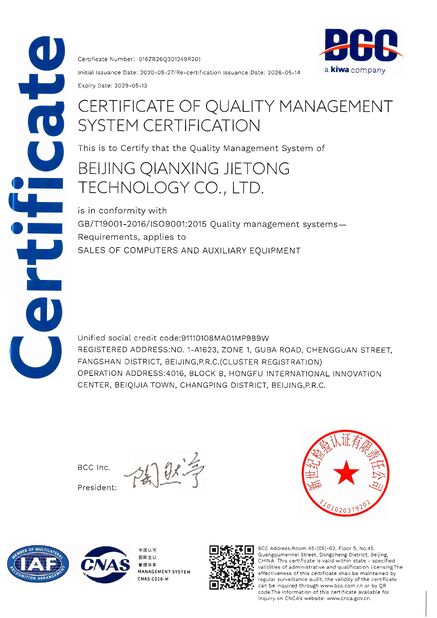
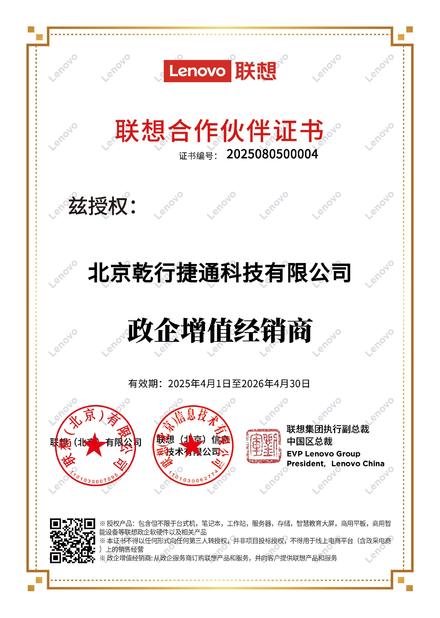
Beijing Qianxing Jietong Technology Co., Ltd.
Sandy Yang/Global Strategy Director
WhatsApp / WeChat: +86 13426366826
Email: yangyd@qianxingdata.com
Website: www.qianxingdata.com/www.storagesserver.com
Business Focus:
ICT Product Distribution/System Integration & Services/Infrastructure Solutions
With 20+ years of IT distribution experience, we partner with leading global brands to deliver reliable products and professional services.
“Using Technology to Build an Intelligent World”Your Trusted ICT Product Service Provider!