Iodyne builds professional solid-state storage for media and entertainment creators. It anticipates the Edge 2.0 era, powered by AI-enabled Mac Mini-grade workstations paired with high-performance bulk storage. Notably, the firm refuses to adopt emerging 256 TB ultra-large SSDs for its product lineup, contrary to common industry expectations.
To explain this strategy, the firm’s co-founder and co-president Mike Shapiro shared insights alongside an overview of Iodyne’s flagship products.
The compact Pro Mini offers 4TB/8TB bus-powered storage with USB-C/Thunderbolt connectivity and up to 3GB/s speeds. Featuring custom in-house drives instead of generic SSDs, it uses AirJet cooling to prevent thermal throttling and includes a customizable e-paper label, with a 16TB upgrade upcoming to meet most portable professional needs.
The larger Pro Data delivers 12TB–192TB capacities, eight full-speed Thunderbolt ports, support for four concurrent readers and petabyte-scale daisy-chaining. With RAID 0/6 support and 5GB/s sustained throughput, it provides studio-grade tailored features absent from ordinary consumer portable SSDs.
Shapiro clarified that 256 TB SSDs carry excessive data failure risks. A single high-capacity drive failure causes massive data loss and lengthy reconstruction. Unlike data center storage prioritizing sheer capacity, Iodyne balances capacity and RAID reliability to secure edge deployments.
Ultra-large drives suit only data center AI workloads like dataset caching and training, where data recreation is feasible. In contrast, edge data including on-site footage, field scans and network logs is often one-of-a-kind and irreplaceable, requiring RAID redundancy and encryption — best achieved via moderate-capacity segmented drives.
Global NAND price hikes have impacted the whole industry, with major manufacturers closing supply to new clients. As a long-standing industry player with decades of supplier ties dating back to Sun Microsystems, Iodyne retains stable chip allocations and pre-crisis supply contracts.
Commodity SSDs now face steep price inflation with no functional upgrades, disappointing buyers. Iodyne’s products stand out by delivering tangible value via RAID protection, encryption and exclusive features. Customers now recognize price hikes as a prolonged industry-wide crisis, making value-added professional storage more competitive.
Its industry-first Pro Mini device passkey security further enhances edge data protection, justifying its premium market positioning.
Beyond traditional studios like Netflix and Apple Studios, Iodyne’s clients include top YouTube creators such as Mr. Beast, major sports organizations and Fortune 500 firms relying on corporate video communication.
The company is expanding its media edge storage expertise into cybersecurity, energy, manufacturing, legal and upcoming healthcare verticals, defining this new on-site AI-driven data paradigm as Edge 2.0.
Healthcare, in particular, is undergoing data transformation, with most medical data being imaging and scan files. Edge-captured patient imaging and DNA sequencing data empower AI-assisted diagnosis and precision medication, opening huge secure storage opportunities.
Edge 2.0 covers decentralized sites including film sets, hospitals, offshore facilities, military bases and satellites, excluding conventional cloud data centers. Compact Pro Data can pair with multiple Mac Minis to deliver encrypted large-capacity RAID storage and local AI computing, enabling real-time edge data processing and secondary cloud AI analysis.
Two key trends drive Edge 2.0 evolution. Modern content production generates multi-dimensional data such as LiDAR and 3D scans, demanding continuous high-speed storage throughput. Meanwhile, M&E firms prioritize IP protection, avoiding feeding original content into public AI clouds to prevent unauthorized model training and asset leakage, fueling demand for local edge data governance.
Alongside performance and security, power efficiency is a core Edge 2.0 benchmark. Unlike data centers chasing maximum PCIe bandwidth, edge scenarios prioritize low power consumption. Iodyne optimizes PCIe configurations and SerDes efficiency to balance high throughput and minimal energy use.
Iodyne’s custom SSD controllers enable highly integrated hardware design for Pro Mini and Pro Data, embedding security enclaves, displays and NAND chips into compact devices, securing long-term technical advantages over generic assembled SSDs.
CXL once lagged behind GPU demands due to PCIe bandwidth limits, leaving NVLink dominant. Yet amid DRAM shortages, CXL gains new value for building disaggregated memory pools and low-cost AI caching tiers. Marvell’s Structera CXL compression chip further proves this potential for large-scale AI clusters.
Bootnote: Meta’s Vistara ASIC technology leverages CXL to combine legacy and high-speed memory, building efficient caching architectures for AI workloads.
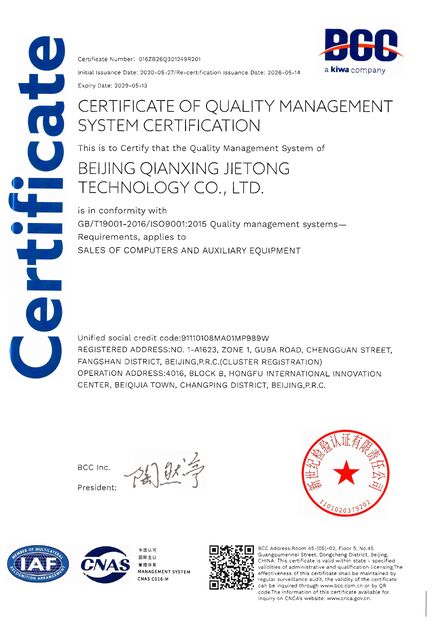
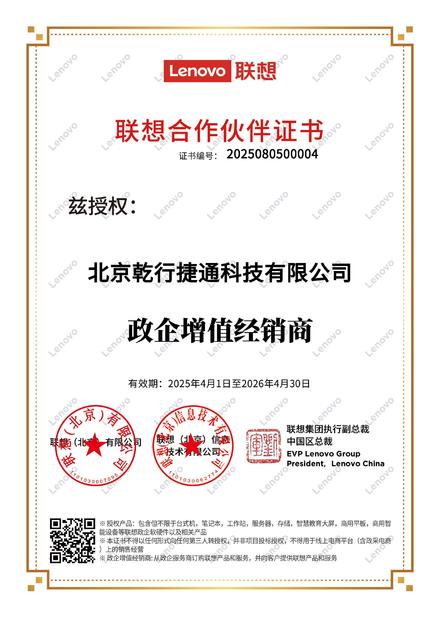
Beijing Qianxing Jietong Technology Co., Ltd.
Sandy Yang/Global Strategy Director
WhatsApp / WeChat: +86 13426366826
Email: yangyd@qianxingdata.com
Website: www.qianxingdata.com/www.storagesserver.com
Business Focus:
ICT Product Distribution/System Integration & Services/Infrastructure Solutions
With 20+ years of IT distribution experience, we partner with leading global brands to deliver reliable products and professional services.
“Using Technology to Build an Intelligent World”Your Trusted ICT Product Service Provider!


 Your message must be between 20-3,000 characters!
 English