Alation rolled out Alation AI Governance, aiming to fill the enterprise gap in standardized record management for AI compliance scenarios. The platform centrally collects all AI models, intelligent agents and development tools into a unified resource inventory, matches each item with corresponding industry regulations, creates fully evidence-based model specification documents, pushes approval processes compliant with regulatory rules, and generates real-time compliance status reports accessible instantly for enterprise management teams.
Alation pointed out that the EU AI Act has set clear documentary standards for high-risk AI applications. Meanwhile, the NIST AI Risk Management Framework is becoming a mainstream purchasing standard in North America, and ISO 42001 has turned into a popular certification goal for many firms. Besides, more localized AI regulatory rules are being issued across U.S. states. For multinational businesses, every new regulation brings extra auditing and compliance obligations that are hard to track via manual workflows. Manual management modes can no longer match current industry demands. You can learn more details in the official blog post.

Druva officially launched its collaborative solution with Dell PowerProtect and Data Domain systems, helping enterprises empower existing Data Domain infrastructure with SaaS-based cyber disaster recovery capabilities. Users are able to keep using their in-data-center and branch-office Data Domain devices, while adopting Druva’s cloud-based management platform to achieve simplified operation, flexible data restoration and enhanced cyber defense capabilities across hybrid IT environments. All business data will be automatically backed up into Druva Data Security Cloud to form isolated and tamper-proof copies, greatly accelerating threat investigation, emergency response and data recovery progress.
Druva mentioned that Dell PowerProtect systems have long lacked lightweight scalable management modules without extra software resource consumption. This newly launched integration perfectly makes up for this shortcoming. Built on cloud-native architecture, the unified control layer runs above physical hardware, taking charge of resource orchestration, version updates and full-stack visibility, so teams no longer need to maintain complicated on-premises data protection hardware and software suites.
The technical integration between Druva and Dell PowerProtect Data Domain is now in limited trial deployment, and will be fully released for mass use within this year. Further information is available in the official blog.
French open-source virtualization developer Vates has officially joined the Everpure Technology Alliance Program, establishing formal technical cooperation between Vates virtualization management system and Everpure storage solutions (formerly known as Pure Storage). Enterprises deploying virtual business loads on Everpure storage have long faced operational troubles: upgrading one core layer tends to cause failures in another. This in-depth partnership effectively solves this pain point, delivering verified and standardized deployment paths for enterprises. Businesses can independently upgrade and iterate virtualization architecture without affecting underlying storage facilities, relying on stable, documented and replicable enterprise-grade deployment frameworks.
Lenovo’s high-end storage subsidiary Infinidat has secured full five-star reviews for its flagship InfiniBox enterprise storage array on Gartner Peer Insights primary storage evaluation platform. Based on hundreds of authentic evaluations submitted by Fortune Global 500 firms and large-scale enterprises across various sectors, Infinidat gains an overall average score of 4.9 out of 5 stars on this platform. Many clients speak highly of its comprehensive performance. One user commented: “Infinidat stands out sharply among peer suppliers in overall performance and operational stability. Among all hardware vendors we have cooperated with, Infinidat delivers the most satisfying after-sales service, fully aligns with our long-term business strategies and responds promptly to our practical demands. Its storage products are the most efficient and stable ones I have used in my 30 years of industry career.”
You can check out the complete news article via the link.
Singapore-headquartered tech firm KAYTUS has officially launched its all-QLC flash storage solution, tailor-made to deliver superior performance, massive expansion capacity and outstanding cost advantages for large-scale GPU computing clusters with up to 10,000 cards. This product effectively breaks data transmission bottlenecks in super-large AI model training scenarios, and helps enterprises maximize the utilization rate of GPU computing resources. KAYTUS stated that modern large-scale AI training tasks are dominated by high-read workloads, requiring tens of thousands of GPUs to access exabyte-level datasets simultaneously with ultra-low millisecond-level latency. Practical verification data shows that under exabyte-scale deployment, this system can reach 10 TB/s total transmission bandwidth and 100 million IOPS. Compared with traditional TLC flash storage products, it can cut down the total five-year operation cost by 70%.
Adopting separated hardware architecture, this solution is equipped with PCIe 5.0 standard QLC solid-state drives, NUMA balanced tuning mechanism, AI-oriented parallel file system, NFS over RDMA transmission protocol and native GPU Direct Storage acceleration technology.
KAYTUS has built a complete QLC flash product lineup, with single drive maximum capacity reaching 122.88 TB.
- KR1180 (1U10) High Density Model: Compact 1U rack-mounted design supports total 1 PB storage capacity and 140 GB/s bandwidth, equipped with optimized air cooling design, lowering latency by 18% in GPU business scenarios.
- KR2280 (2U24) Versatile Flagship Model: Accommodates 24 QLC drives and 7 PCIe 5.0 expansion slots, compatible with Intel and AMD mainstream server platforms, and supports liquid cooling schemes for high-efficiency data centers.
- KR4266 (4U60) Mass Storage Model: Boasts top-tier physical deployment density with single device capacity up to 7 PB, offering 260 GB/s continuous read bandwidth and 20 million IOPS processing capability.
It is known that KAYTUS is a global-oriented brand closely linked with China’s Inspur Group, its brand name derives from K2 mountain, and the company was registered and established in Singapore back in 2022. Click the link to browse its full storage product lineup.
According to South Korean industry insiders, Samsung is gradually phasing out the production of traditional 2D NAND flash chips at its Hwaseong 12th production base, and transforming this workshop into a professional production line for advanced 1c generation DRAM memory chips. Earlier in March, Kioxia has notified clients of its plan to stop supplying 2D NAND and early third-generation BiCS flash products. Meanwhile, Micron only keeps limited MLC NAND output to satisfy existing signed client orders, and also announced plans to retire its consumer-grade storage brand Crucial. As low-capacity general-purpose NAND chips keep exiting the market, the market supply gap keeps widening. Recently, the spot trading price of 64Gb MLC chips fluctuates between 20 and 28 US dollars, surging over 300% compared with the price level at the end of 2024.
Positioned as a professional private cloud operating system developer, VergeIO announced the official commercial release of Kubernetes compatible functions for its VergeOS platform. This update integrates CSI storage interface driver, cloud resource management controller, cluster automatic scaling tool and Rancher platform node matching driver with visual interface extensions. All functional components are released in Helm chart format via its official GitHub repository verge-io. With these new features, enterprises deploying Kubernetes services on VMware infrastructure can merge three sets of independent paid authorization services including vSphere virtualization platform, independent Kubernetes distribution and overlay storage system into one unified management platform.
The firm indicated that most enterprises running Kubernetes on VMware currently need to purchase services from three different vendors to finish one set of business deployment. They need to pay for Broadcom’s vSphere authorization to deploy cluster nodes, purchase independent Kubernetes distribution services such as Tanzu, OpenShift or Rancher Prime, and additionally buy third-party overlay storage tools including Longhorn and Portworx, since native vSphere storage strategies cannot be smoothly adapted to Kubernetes environments without extra commercial plug-ins. Now VergeOS can natively cover all the above three core functional layers.
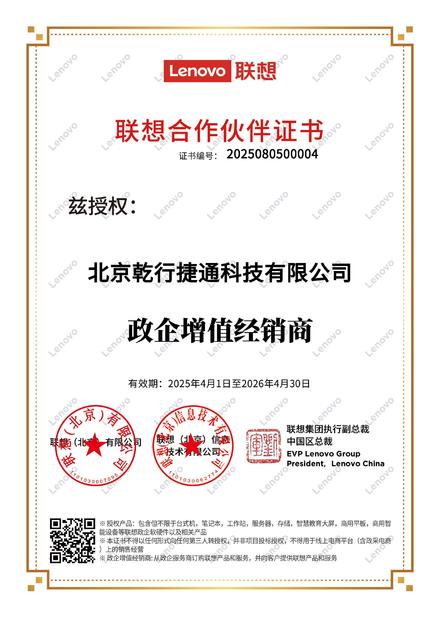
Beijing Qianxing Jietong Technology Co., Ltd.
Sandy Yang/Global Strategy Director
WhatsApp / WeChat: +86 13426366826
Email: yangyd@qianxingdata.com
Website: www.qianxingdata.com/www.storagesserver.com
Business Focus:
ICT Product Distribution/System Integration & Services/Infrastructure Solutions
With 20+ years of IT distribution experience, we partner with leading global brands to deliver reliable products and professional services.
“Using Technology to Build an Intelligent World”Your Trusted ICT Product Service Provider!


 Your message must be between 20-3,000 characters!
 English