The storage landscape for AI training and inference is dominated by scale-out mid-range file and object storage, which supports NVIDIA GPU Direct, KV Caches and STX architecture to keep GPUs processing token data. Yet vast volumes of enterprise data reside on high-end monolithic arrays from Dell PowerMax, Hitachi Vantara VSP One Block High End, IBM DS6000 and Lenovo InfiniBox — none of which support STX and its associated components.We interviewed David Chapa, Chief AI Strategist at Hitachi Vantara, to explore this gap.
Chapa stated that NVIDIA BlueField-4 STX marks a broader evolution of AI infrastructure architecture. Traditional enterprise arrays are built for efficient storage request handling, while STX shifts value creation in AI infrastructure. Legacy high-end arrays prioritize durability, resilience, performance, uptime and centralized data services. By contrast, STX embeds more intelligence into data processing workflows, bringing security, orchestration, data locality, memory coordination and data services closer to GPUs and AI runtime environments.
The core focus is not whether these capabilities must run natively on storage arrays, but how to deploy them optimally across AI data pipelines. Hitachi Vantara does not view the current incompatibility as a limitation of its arrays, but a natural architectural choice amid evolving AI infrastructure. High-end enterprise arrays remain vital for delivering reliable data services including resilience, availability, performance, durability and unified management.
As AI data pipelines increasingly rely on DPU-accelerated services, orchestration layers, caching and locality-aware execution, certain functions will move closer to compute resources, while enterprise arrays keep focusing on their core strength: trusted data services.
When asked if Hitachi Vantara’s high-end arrays will eventually integrate with NVIDIA STX, Chapa noted STX and CMX represent substantial engineering achievements. The discussion is less about product roadmaps and more about architectural positioning for evolving AI systems.
Modern AI infrastructure exposes constraints never factored into traditional enterprise architectures. The challenge today lies not in standalone storage, GPU or network performance, but the synergy of data, memory, compute, security and orchestration as AI deployments scale.
STX consolidates more of the AI data pipeline into NVIDIA’s integrated stack via BlueField DPUs, networking and reference designs that shape vendor integration and differentiation. CMX targets context memory, KV caches and inference states specifically. Hitachi Vantara does not see these technologies as an attempt to bypass enterprise storage, but as an industry split between two distinct data categories: transient runtime data for AI jobs, and persistent, governed enterprise data that exists long after AI tasks complete.
The two data types carry different operational constraints. KV caches and inference contexts are short-lived and latency-sensitive, making them better suited to run near GPUs, memory tiers or AI runtime. By comparison, core business data, compliance controls and enterprise-wide data services require robust infrastructure built for long-term use, governance, resilience and large-scale enterprise operations.
For Hitachi Vantara, enabling STX support on high-end arrays is far more than a simple firmware update. It involves fundamental considerations around data locality, memory load, data persistence, security boundaries, orchestration and the optimal placement of infrastructure services.
The priority is to define functional positioning as AI infrastructure matures, identify differentiation points, determine reasonable integration scope, and allocate engineering resources to maximize customer value.
NVIDIA has effectively addressed key bottlenecks across AI infrastructure, yet its architectural approaches do not fit all customers, workloads or platform strategies. Hitachi Vantara distinguishes lasting architectural shifts from short-term feature trends, assesses integration that brings tangible value, and directs development efforts to deliver the greatest benefits to users.
Hitachi Vantara positions its high-end enterprise arrays outside the direct data delivery chain for GPU servers, deeming such integration architecturally unsuitable. These platforms serve as core record systems optimized for durability, governance, resilience and enterprise-scale operations, rather than transient, latency-critical KV caches and inference contexts.
We believe high-end enterprise arrays such as VSP One Block High End will adopt AI tools like internal intelligent agents to streamline management. As agentic AI and mainstream inference gain traction, enterprises will demand access to core record data for AI workloads. Ultimately, AI data pipelines will expand to incorporate high-end enterprise arrays as key data sources.
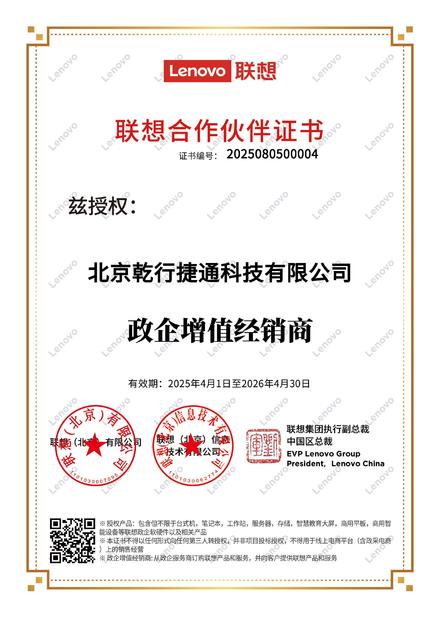
Beijing Qianxing Jietong Technology Co., Ltd.
Sandy Yang/Global Strategy Director
WhatsApp / WeChat: +86 13426366826
Email: yangyd@qianxingdata.com
Website: www.qianxingdata.com/www.storagesserver.com
Business Focus:
ICT Product Distribution/System Integration & Services/Infrastructure Solutions
With 20+ years of IT distribution experience, we partner with leading global brands to deliver reliable products and professional services.
“Using Technology to Build an Intelligent World”Your Trusted ICT Product Service Provider!


 Your message must be between 20-3,000 characters!
 English