


 English


01 The Short Version
Enterprise application platforms are rarely limited by processor cores. They are limited by how storage is presented, and by how much capacity can be added before the platform has to be redesigned. A two-socket server and a dual-controller array, both in 2U, is the smallest configuration in which that question gets a proper answer: xFusion's FusionServer 2258 V7 supplies the compute, and Huawei's OceanStor 5220 supplies shared storage that both compute nodes read from.

Four rack units in total. That is the whole footprint.
02 The Defining Numbers
On the compute side: 2 × 4th Gen AMD EPYC 9004 Series processors at up to 400W TDP, 24 DDR5 DIMM slots, PCIe 5.0 across eight full-height expansion slots, and a front cage that takes either 24 NVMe U.2 SSDs, 25 SAS/SATA SSDs, or 16 SATA HDDs directly connected to the CPUs.
On the storage side: a 2U controller enclosure with dual active-active controllers, 64GB or 96GB of system cache — scaling to 384GB as controllers are added — up to 28 front-end ports per enclosure, and RAID-TP, which tolerates three simultaneous drive failures.
None of these is a peak-throughput figure. Each one decides what the platform does when something fails, or when the workload outgrows the initial purchase.
03 What It Replaces
The configuration this displaces is usually one of two things.
The first is per-server storage: disks attached to each host, with replication handled by the application. Redundancy exists on paper, but storage capacity is stranded per node and cannot be pooled without copying data between systems.
The second is a single-controller array. It presents shared volumes, but a controller fault interrupts service, and the array's internal expansion is bounded by what one processor can address. Both limits surface later, as unplanned downtime or as a second array bought to sit beside the first.
04 Design Without a Single Point of Failure
On the storage side, redundancy is structural. The OceanStor 5220 runs dual active-active controllers, with hot-swappable I/O modules — four per controller enclosure — and RAID-TP as the top protection level. RAID-TP tolerates three simultaneous drive failures, against RAID 6's two. The trade is capacity efficiency for survival margin, and it is a deliberate choice rather than a default.
On the compute side, the 2258 V7 carries the same principle through power and thermal design: redundant power and cooling, xFusion's Extended Volume Air Cooling (EVAC) for heat dissipation across a 400W-per-socket configuration, and fault data collection that captures diagnostic information when a CPU crashes so the fault can be located without reproducing it.
05 Chassis and Configuration Options
Both components are 2U, which is what makes the pairing practical in a rack that is already full.
The 2258 V7's front cage is offered in three drive configurations — 24 × NVMe U.2, 25 × SAS/SATA SSD, or 16 × SATA HDD — and these are alternatives, not layers. The choice sets the character of the node: all-flash for latency-sensitive work, SAS/SATA for a mixed tier, or direct-attached SATA where cost per terabyte matters more than IOPS.
The OceanStor 5220's controller enclosure takes either 25 × 2.5-inch or 12 × 3.5-inch SAS drives, and capacity extends through SAS disk enclosures: a 2U 25-bay 2.5-inch unit, or a 4U 24-bay 3.5-inch unit. Expansion is therefore an addition to the array already in service, not a replacement of it.
06 Interfaces and Connectivity
The OceanStor 5220 accepts 8, 16 or 32 Gbps Fibre Channel and 1, 10 or 25 Gbps Ethernet on the front end, with SAS 3.0 on the back end. Because the I/O modules are hot-swappable and there are four slots per controller enclosure, the transport mix is a configuration decision rather than a fixed property of the array. Storage protocols supported are FC, iSCSI, NFS and CIFS — block and file from one system.
The 2258 V7 provides PCIe 5.0 across eight full-height standard slots, which is where the host bus adapters for that front-end fabric are installed. Eight full-height slots in a 2U chassis is what allows the node to carry both storage connectivity and network uplinks without compromise.
07 Management and Ecosystem
The OceanStor 5220 is managed through DeviceManager, with UltraPath for multipath and BCManager for backup and replication tasks. DME IQ provides cloud-based monitoring across an installed base rather than one array at a time. The value-added software set covers the operations that usually become separate purchases: SmartThin for thin provisioning, SmartMigration for non-disruptive data movement, HyperSnap for point-in-time copies, HyperClone, HyperReplication, HyperMetro for active-active configurations, SmartQoS for performance control, and HyperEncryption for data-at-rest protection.
On the server side, xFusion's management layer handles version push and upgrades without onsite attendance, and performs a substantial share of deployment steps through tools rather than manual configuration — the difference between a platform that scales by procedure and one that scales by headcount.
08 Specifications
xFusion FusionServer 2258 V7
|
Specification |
Detail |
|
Form factor |
2U, two-socket rack server |
|
Processors |
2 × 4th Gen AMD EPYC 9004 Series (Genoa), up to 400W TDP |
|
Memory |
24 × DDR5 DIMM slots |
|
Expansion |
PCIe 5.0; 8 × full-height standard PCIe slots |
|
Drive options |
24 × NVMe U.2 SSD, or 25 × SAS/SATA SSD, or 16 × SATA HDD (CPU-attached) |
|
Cooling |
EVAC (Extended Volume Air Cooling) |
|
Reliability features |
Fault data collection on CPU crash; redundant power and cooling |
|
Target workloads |
SDS, VDI, CDN, virtualization, big data, database, cloud, AI inference, web |
Huawei OceanStor 5220
|
Specification |
Detail |
|
Form factor |
2U controller enclosure, dual active-active controllers |
|
System cache (dual controllers) |
64GB / 96GB |
|
Maximum cache (scales with controllers) |
64GB – 384GB |
|
Storage protocols |
FC, iSCSI, NFS, CIFS |
|
Front-end port types |
8/16/32 Gbps FC; 1/10/25 Gbps Ethernet |
|
Back-end port types |
SAS 3.0 |
|
Hot-swappable I/O modules |
up to 4 per controller enclosure |
|
Front-end ports |
up to 28 per controller enclosure |
|
Drive types |
SSD, SAS, NL-SAS |
|
RAID levels |
RAID 10, RAID 5, RAID 6, RAID-TP (tolerates three simultaneous drive failures) |
|
Controller enclosure drives |
25 × 2.5-inch SAS or 12 × 3.5-inch SAS |
|
Expansion enclosures |
2U 25-bay 2.5-inch SAS; 4U 24-bay 3.5-inch SAS |
|
Management software |
DeviceManager, UltraPath, BCManager, DME IQ |
|
Power |
100–240V AC ±10%; 192–288V DC |
|
Controller enclosure dimensions |
86.1 × 447 × 410 mm (2.5-inch), 86.1 × 447 × 488 mm (3.5-inch) |
|
Weight (excluding drives) |
16.4 kg (2.5-inch enclosure), 16.3 kg (3.5-inch enclosure) |
09 What to Verify Before You Commit
Cache sizing: 64GB or 96GB is the shipped configuration, but the 384GB maximum scales with controller count. Confirm how many controllers that figure assumes before treating it as a growth path.
Protocol mix: with four hot-swappable I/O modules per controller enclosure, decide FC versus iSCSI per workload before ordering rather than after. Retrofitting a fabric is not a like-for-like swap.
RAID level: RAID-TP costs capacity efficiency and buys tolerance of three simultaneous drive failures. That is the right trade for some datasets and the wrong one for others.
Server drive configuration: 24 NVMe U.2, 25 SAS/SATA SSD and 16 SATA HDD are three separate cages. Pick the ratio before the chassis is built.
Power and cooling: 400W per socket changes both. Confirm the power supply sizing and the rack circuit against the fully populated configuration, not the as-shipped one.
Expansion path: the array grows by adding SAS disk enclosures. Note that the -38.4V to -75V DC power option applies to disk enclosures only.
10 Where This Fits
A 2U server and a 2U dual-controller array is a deliberately small platform, and that is the point. It gives a workload shared storage with controller-level redundancy, a compute tier that can carry both storage and network connectivity without compromise, and an expansion path that adds capacity to what is already installed rather than replacing it. For an enterprise stepping up from per-server disks, or consolidating several single-controller arrays, four rack units is a low ceiling to start from.
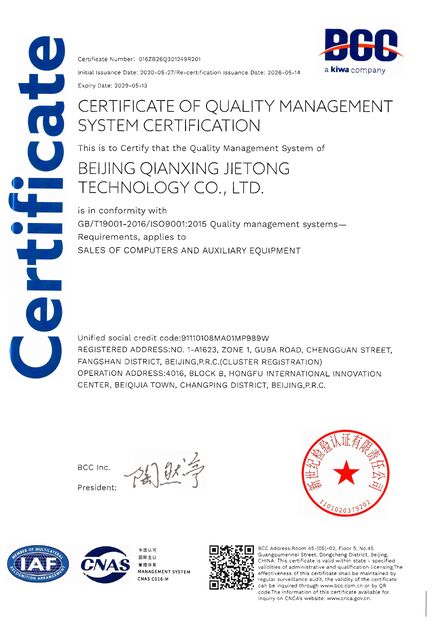
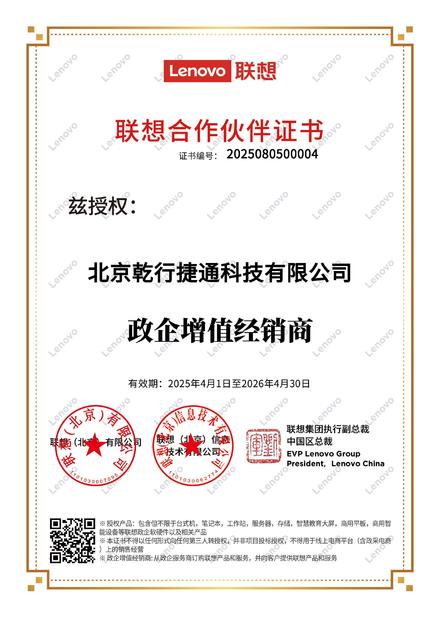
With 20+ years of IT distribution experience, Qianxing Jietong supplies and integrates platforms of this class — server and storage selection, capacity and RAID sizing, fabric design, and delivery against an agreed maintenance window.
Beijing Qianxing Jietong Technology Co., Ltd.
Thinking Ahead, Meeting Needs, and Customer First.
Your Trusted ICT Product Service Provider!