


 English


HP OmniBook Ultra 16 Review
The HP OmniBook Ultra 16 is HP’s 16-inch RTX Spark laptop, 0.62 inches thick, built on NVIDIA N1X superchip with a 3K OLED panel. We tested two variants: a 128GB LPDDR5X + 2TB Gen5 SSD model, and a 32GB + 1TB Gen5 SSD unit (Best Buy’s $3,199.99 base config).Other options include a 64GB/2TB version at $4,999.99 and the 128GB/2TB exclusive HP configurator build priced $6,229.99 (Oct 14).
We compared it against Lenovo Pro 9n 15, Surface Laptop Ultra Business and Razer Blade 16 (RTX 5090, top x64 laptop here). Battery results will come once our new test rig is ready.

Key takeaway: The 128GB OmniBook is our best-performing RTX Spark device. It achieved 7004 in Cinebench 2026 multi-core, finished Qwen3.6 coding test fastest, and completed the heavy OpenBLAS workload that crashed two Surface laptops while holding steady at 98°C. The 32GB variant delivers ~2% lower performance on CPU, MLPerf and RAG. For RTX Spark systems, memory is the main bottleneck: limited GPU memory restricts which local AI models can run.
Key Takeaways
- --128GB model supports all local AI test tiers. With 62.5GB GPU-accessible memory, it runs gpt-oss:20b and Qwen3.6-35B-A3B at 58.0 and 89.5 tokens/s. Its Qwen coding task completed all three runs in 72s, fastest among tested devices. Razer Blade 16’s RTX 5090 is 2.3× faster for models fitting within its 24GB VRAM.
- --32GB version matches speed for small models but lacks capacity. Llama 3.1 8B hits 56.4 tok/s vs 56.5 on 128GB unit, yet its 12GB GPU memory cannot load larger AI models or run coding agent benchmarks.
- --Class-leading multi-core performance: 7004 Cinebench 2026 multi-core, 35% ahead of Blade 16. LLVM compile finished in 206.6s vs 327.0s on Blade.
- --Hot yet stable under full load. Both HP laptops maintained 98°C across all-core testing with no performance drop, passing OpenBLAS that triggered power cuts on two Surface Ultra devices.
- --Gen5 SSD speed limited by Windows on Arm. The 128GB unit’s Sandisk SN8050S reaches 13,833MB/s sequential read and 1.89M raw-device IOPS, but NTFS + BitLocker caps 4K random reads at only 437.8K IOPS.
Build and Design
This laptop uses CNC-machined three-piece aluminum chassis in Eclipse gray. Dimensions: 14.01 × 10.1 in; thickness tapers 15.7mm rear /11.6mm front, weight 4.89 lb. HP calls it the thinnest RTX Spark PC so far. Materials include 50% recycled metal, 85% recycled plastic in keyboard parts and ocean-bound plastic for speaker housings.
The chassis feels premium with no flex, similar to high-end ZBook workstations. HP’s unique tower hinge & trunk design extends the base past the hinge, exhausting hot air directly rearward instead of toward the screen. Performance mode delivers up to 70W sustained power. Our tests confirmed stable N1X clocks over 30 minutes, though chip hits the 98°C thermal limit, running hotter than Lenovo’s Pro/Yoga 9n.
Bottom panel has a large intake grille. Two fans with thin 0.15mm blades sit at rear corners, linked to three heat pipes covering the processor and SSD. A 99Wh battery occupies the front section; thermal and IR sensors track internal and surface temperatures. Memory is permanently soldered LPDDR5X and cannot be upgraded.
Hardware features: second-gen backlit full-size keyboard, quad speakers with DTS spatial audio and Poly tuning. Large 160×100mm haptic click-anywhere touchpad. 5MP IR webcam with physical privacy shutter plus dedicated mic mute key.
Display: 16-inch 3K (2880×1800) OLED touchscreen with Gorilla Glass 3, up to 120Hz VRR, 0.2ms response. Specs: 500 nits SDR /1100 nits HDR, full DCI-P3, VESA DisplayHDR True Black 1000, Delta E<1, screen-to-body ratio 91%.
Ports: Left: HDMI 2.1, two 40Gbps USB‑C (PD + DP2.1), 3.5mm audio jack. Right: microSD card reader, two 10Gbps USB‑A. Wireless: MediaTek MT7925, Wi‑Fi7 + Bluetooth 6.0.
HP quotes up to 17h runtime from the 99Wh battery. Included 140W GaN USB‑C charger is compact; HP claims ~50% charge in 30 minutes.
RTX Spark N1X Platform
RTX Spark denotes Windows PCs built on N1X superchip, laptop counterpart of GB10 data center chip. Our tested HP units use top-bin 20-core Grace CPU (10P+10E, no SMT) paired with 6144-core Blackwell RTX GPU; HP also sells an 18-core variant with 5120 GPU cores.
LPDDR5X runs 9400 MT/s on a 256-bit bus and is shared by CPU and GPU. Memory split is set via NVIDIA software (not BIOS). Our 128GB system used a 64GB GPU /64GB CPU split (62.5GB usable GPU memory). The 32GB model used a 12GB/20GB split for direct Lenovo comparison. This static allocation is a Windows limitation; native unified memory support is reportedly in development by Microsoft and NVIDIA.
It runs Windows 11 26H1 Arm64. x64 apps run via Prism emulation. Benchmarks use native Arm64 builds for fair CPU comparison unless noted.
HP OmniBook Ultra 16 Specifications
| Specification | HP OmniBook Ultra 16 (16-bk0xxx) |
|---|---|
| Platform |
NVIDIA RTX Spark N1X, 20C Grace CPU + 6144-core Blackwell RTX GPU (tested)Optional:18C CPU +5120 GPU cores |
| Memory |
32/64/128GB soldered LPDDR5X-9400128GB:64GB GPU/64GB system; 32GB:12GB GPU/20GB system |
| Storage |
1TB or 2TB PCIe Gen5 NVMe SSDTest 1:2TB Sandisk SN8050S; Test2:1TB KIOXIA KBG80ZNV |
| OS | Win11 Home/Pro Arm64; Test1:Pro, Test2:Home |
| Display |
16-inch 3K OLED touch,120Hz VRR,0.2ms500nits SDR,1100nits HDR, 100% DCI-P3,DeltaE<1DisplayHDR True Black1000, Gorilla Glass3 |
| Ports | 2×40Gbps USB‑C(PD,DP2.1),2×10Gbps USB‑A,HDMI2.1,microSD,3.5mm audio |
| Wireless | MediaTek Wi‑Fi7 MT7925,BT6.0 |
| Camera | 5MP IR with privacy shutter |
| Audio | Quad speakers, discrete amps, DTS spatial audio, Poly tuning |
| Input | 2nd-gen backlit keyboard;160×100mm haptic touchpad |
| Battery | 99Wh Li-poly, up to17h claimed runtime |
| Charge | 140W GaN USB‑C charger; ~50% in 30min |
| Thermals | Tower hinge design,2 fans,3 heat pipes,up to70W TDP |
| Dimensions | 14.01 ×10.1 ×0.62in (15.7mm rear /11.6mm front) |
| Weight | 4.89 lb |
| Color | Eclipse gray |
Test Setup & Methodology
Two OmniBook samples: 128GB/2TB (Win11 Pro Arm64) and 32GB/1TB (Win11 Home Arm64). All benchmarks ran in HP Performance mode, plugged in, Windows set to Best performance. We used sr-client 1.2 automated benchmark suite, reported values are median of repeated test runs.
| System | CPU | Memory | AI GPU | SSD | OS & Mode |
|---|---|---|---|---|---|
| OmniBook 128GB | N1X 20C | 128GB LPDDR5X (64/64) | 6144-core Blackwell,62.5GB usable | Sandisk SN8050S 2TB Gen5 | Win11 Pro 26H1 Arm64, HP Performance |
| OmniBook 32GB | N1X 20C | 32GB LPDDR5X (12/20) | 6144-core Blackwell,12GB usable | KIOXIA 1TB Gen5 | Win11 Home 26H1 Arm64, HP Performance |
| Surface Laptop Ultra Business | N1X 20C | 128GB LPDDR5X (64/64) | 6144-core Blackwell,62.5GB usable | SK hynix 1TB Gen5 | Win11 Pro 26H1 Arm64, Best performance |
| Lenovo Pro9n 15 | N1X 18C | 32GB LPDDR5X (12/20) | 5120-core Blackwell,12GB usable | Samsung 1TB Gen4 | Win11 Pro 26H1 Arm64, Lenovo Performance |
| Razer Blade16 | Ryzen AI9 HX370 | 32GB LPDDR5X-8000 | RTX5090 Laptop,24GB VRAM | Samsung 2TB Gen4 | Win11 Home25H2 x64, Razer Performance |
Benchmark labels:
- DNF: Started but failed (Surface OpenBLAS power cut)
- Not run: Skipped due to insufficient GPU memory
- N/A: Irrelevant for hardware (e.g. SMT on non-SMT chips)
Local AI Performance
AI performance depends on model loading capability and inference speed. The 128GB OmniBook and Surface handle Tier M large models; 32GB HP and Lenovo run small models quickly but cannot load bigger ones.
MLPerf Client v2.0
MLPerf runs Llama3.1 8B and Phi-4-mini, measuring token speed and first-token latency, also agent workflows. The two OmniBooks deliver nearly identical small-model speeds matching Surface. Pro9n trails slightly, Blade16 leads by a large margin.
| MLPerf Client v2.0 | OmniBook 128GB | OmniBook32GB | Surface | Pro9n 15 | Razer Blade16 |
|---|---|---|---|---|---|
| Llama3.1 8B first token(s) | 0.274 | 0.275 | 0.284 | 0.303 | 0.149 |
| Llama3.1 8B tok/s | 56.5 | 56.4 | 56.4 | 55.1 | 128.8 |
| Phi-4-mini tok/s | 96.8 | 96.8 | 97.5 | 95.2 | 222.7 |
| Data Analyst Agent total(s) | 53.0 | 52.4 | 52.6 | 56.2 | 27.8 |
| SWE Agent total(s) | 45.3 | 46.2 | 46.0 | 48.0 | 24.6 |
Model Loading
Ollama test measures cold/warm load time from SSD. Tier S: gpt-oss:20b, Tier M: Qwen3.6-35B-A3B.
| Model loading | OmniBook128GB | OmniBook32GB | Surface | Pro9n | Razer Blade16 |
|---|---|---|---|---|---|
| gpt-oss:20b cold load(s) | 6.23 | Not run | 6.57 | Not run | 8.71 |
| Qwen3.6-35B-A3B cold load(s) | 9.04 | Not run | 8.77 | Not run | Not run |
The 128GB OmniBook posted fastest cold load for gpt-oss:20b. Unified memory lets it skip slow PCIe VRAM transfer seen on discrete GPU Blade 16.
Coding Agent
Codex CLI runs fixed coding tasks. Success requires passing all repository tests.
| Codex CLI coding agent | OmniBook128GB | OmniBook32GB | Surface | Pro9n | Razer Blade16 |
|---|---|---|---|---|---|
| Qwen3.6-35B-A3B runtime(s) | 72.0 | Not run | 88.6 | Not run | Not run |
| Qwen3.6-35B-A3B tok/s | 89.5 | Not run | 89.2 | Not run | Not run |
| Tier S gpt-oss:20b runtime(s) | 115.3 | Not run | 191.8 | Not run | 64.4 |
128GB OmniBook passed all coding test attempts, beating Surface on Qwen3.6 task. Concurrent browser+AI workloads create memory bus contention on unified memory systems.
Retrieval-Augmented Generation
RAG test embeds SQuAD passages and answers queries with Phi-4-mini. All systems run this small model, so only speed differs. Accuracy scores are nearly identical across all hardware. Blade16 has fastest ingestion and generation speed.
| RAG | OmniBook128GB | OmniBook32GB | Surface | Pro9n | Razer Blade16 |
|---|---|---|---|---|---|
| Ingest 20963 passages(s) | 187.0 | 195.2 | 189.8 | 191.8 | 131.0 |
| Answer generation tok/s | 104.4 | 102.0 | 102.7 | 96.6 | 209.2 |
CPU Performance
The three 20-core N1X laptops show very similar multi-threaded CPU performance. The 18-core Lenovo Pro9n falls ~7–11% behind. Against Blade16’s Ryzen AI 9 HX370, N1X is faster in rendering, compression and compiling, but slower in single-threaded Python, GROMACS and primesieve.
Cinebench 2026 & Sustained Load
| Cinebench 2026 | OmniBook128GB | OmniBook32GB | Surface | Pro9n | Razer Blade16 |
|---|---|---|---|---|---|
| Single core | 558.6 | 564.7 | 558.5 | 518.2 | 480.0 |
| Multi core | 7004 | 6934 | 6963 | 6394 | 5179 |
| Steady-state / first run | 0.998 | 0.998 | 1.011 | 1.011 | 1.009 |
The 128GB OmniBook leads multi-core, 35% above Blade16. Both HP laptops retain 99.8% performance over a 30-minute sustained test at 98°C.
Other CPU Benchmarks
7-Zip compression: OmniBooks lead multi-threaded results. Blender rendering performance is close between 20-core N1X devices. 128GB OmniBook finished LLVM compile in 206.6s, 37% faster than Blade16. N1X systems suffer weak SVT-AV1 encoding speed due to immature Arm64 code.
Single-threaded workloads (primesieve, Python, Stockfish) favor Blade16’s Zen5. Prism x64 emulation overhead is modest; x64 Cinebench crashes on N1X hardware and was excluded.
GROMACS, OpenBLAS & Memory
Blade16 wins GROMACS and full-core OpenBLAS tests. Critical difference: both OmniBooks completed OpenBLAS while Surface cut power under heavy load. 128GB HP supports all problem sizes up to N=40000. Efficiency cores add overhead for OpenBLAS.
N1X’s huge memory bandwidth is its standout strength: ~120GB/s STREAM Triad throughput, 2.5× faster than Blade16. OmniBook memory latency ~143ns, much better than Surface, but worse than Razer. Higher core-to-core latency limits single-thread performance.
Gaming and GPU Encoding
SuperTuxKart 1080p Ultra benchmark runs native Arm64 and emulated x64 builds. At this resolution, performance is CPU-bound, so Blade16’s RTX5090 is underutilized. Emulated x64 yields higher FPS, pointing to immature Windows-on-Arm game ports. NVENC HEVC encoding speeds are similar across all NVIDIA machines.
| SuperTuxKart 1080p Ultra | OmniBook128GB | OmniBook32GB | Surface | Pro9n | Razer Blade16 |
|---|---|---|---|---|---|
| Native avg FPS | 225.9 | 236.1 | 235.9 | 218.4 | 200.0 |
| Emulated x64 avg FPS | 266.5 | 265.4 | 264.6 | 248.6 | N/A |
| FFmpeg NVENC HEVC 4K60 FPS | 138 | 137 | 135 | 139 | 132 |
Thermals
Both OmniBooks hit the 98°C thermal cap during all-core benchmarks and hold stable clocks without throttling. Temperatures stay 96–98°C across heavy workloads. Windows only reports CPU temperatures; GPU temperature sensors are unavailable. Lenovo Pro9n runs 5–18°C cooler at similar clock speeds.
At full load, N1X maintains steady 3.1–3.4GHz. HP firmware avoids clock oscillation for consistent benchmark results. SSD temperatures remain manageable, peaking at 52°C (Sandisk) and 64°C (KIOXIA).
Storage Performance
We used fio storage tests comparing raw device and file-system performance. Windows-on-Arm BitLocker + VBS creates major I/O overhead. The 128GB OmniBook’s Sandisk SN8050S reaches 13,833MB/s sequential read and 11,719MB/s write. Its raw 4K random read IOPS hits 1.89M but drops to 437.8K under NTFS+BitLocker, a 4.3× reduction. The x64 Blade16 sees far less storage stack overhead. Long tail latency spikes appear on Arm systems under heavy random I/O.
Conclusion
The 128GB HP OmniBook Ultra 16 is the most capable RTX Spark laptop in our launch review. It matches Surface Laptop Ultra in CPU, AI and gaming, supports both local AI tiers thanks to 62.5GB usable GPU memory, and successfully completes demanding OpenBLAS workloads that crash the Surface Ultra. Its main limitations are high operating temperatures and Windows-on-Arm storage stack bottlenecks. The 32GB variant shares identical chassis, thermals and small-model AI speed, but its limited GPU memory prevents running large local AI models, making it only suitable for lightweight AI workloads.
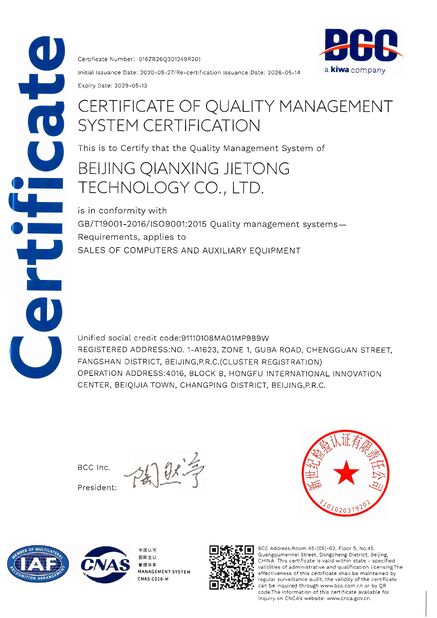
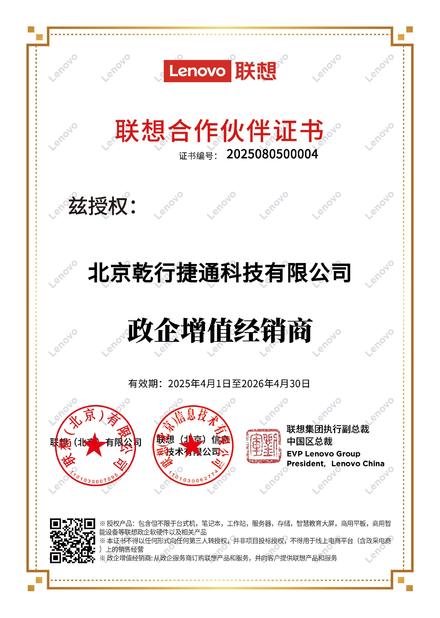
Beijing Qianxing Jietong Technology Co., Ltd.
Sandy Yang/Global Strategy Director
WhatsApp / WeChat: +86 13426366826
Email: yangyd@qianxingdata.com
Website: www.qianxingdata.com/www.storagesserver.com
Business Focus:
ICT Product Distribution/System Integration & Services/Infrastructure Solutions
With 20+ years of IT distribution experience, we partner with leading global brands to deliver reliable products and professional services.
“Using Technology to Build an Intelligent World”Your Trusted ICT Product Service Provider!