


 English



Last November, Oregon State University (OSU) showcased vessel-based plankton research powered by a Dell PowerEdge XE7745 server equipped with eight Solidigm D5-P5336 SSDs and NVIDIA RTX PRO 6000 GPUs. The hardware’s impressive performance drew cross-campus attention, prompting widespread faculty demand. To meet surging university-wide AI needs, OSU plans to deploy an entire rack of such servers. Partnering with Metrum AI, Dell, NVIDIA and Solidigm, OSU is building a replicable on-premises AI model for academic teaching, assessment and student data protection.

Generative AI’s Academic Evaluation Crisis
Traditional written assignments have lost credibility amid generative AI, as AI-written essays are increasingly difficult to identify. Oral evaluation serves as a reliable alternative yet cannot scale for large-enrollment university courses. Metrum AI was created to solve this scalability bottleneck with automated oral-assessment infrastructure.
Metrum AI’s Multimodal Assessment Platform
Co-founded by CEO Steen Graham and CTO Chetan Gadgil, Metrum AI builds operational multimodal AI agents for industries ranging from insurance to manufacturing. Its OSU education solution adopts an on-premises, human-in-the-loop design, tightly validated on Dell enterprise GPU servers.
The platform analyzes student presentation videos through three core workflows: it transcribes audio via OpenAI Whisper and extracts slide content using Qwen3-VL-30B; it generates rubric-based assessments with the Qwen3-30B-A3B reasoning model on vLLM; it delivers evidence-tagged draft reviews for faculty approval. All AI feedback remains invisible to students until manually authorized, ensuring full faculty authority over grading.
From Classroom Experiment to Campus-Wide Mandate
OSU finance professor Jonathan Kalodimos originally coded a basic AI grading tool for MBA presentations. After its positive student reception, Dell connected him with Metrum AI, expanding the prototype into an official campus solution. Kalodimos coined the term “rubric engineering”, referring to structured extraction of student performance data to deliver objective, evidence-based grading.
Two real cases demonstrate the platform’s value: it uncovered solid subject knowledge from a student with poor presentation delivery, and recognized a logically complete argument from a disjointed presentation that human evaluators initially dismissed. The AI eliminates subjective human bias caused by presentation styles.
FERPA Compliance: Why On-Premises Beats Cloud
OSU research computing director Christopher Sullivan highlighted strict FERPA student data regulations as the core reason for rejecting cloud AI. External cloud APIs would transmit identifiable student videos, transcripts and grading records to third parties, bringing insurmountable compliance risks.
Local on-premises hardware also builds student trust. Learners feel more secure knowing their biometric presentation data is stored and processed within OSU’s private infrastructure, rather than on public cloud platforms controlled by external vendors.
Pilot Deployment and Future Scaling
The ongoing pilot covers roughly 500 students, requiring AI-generated evaluations ready before faculty manual grading within a tight four-day deadline. The standardized AI framework also ensured grading continuity when an abrupt instructor replacement occurred mid-semester.
Recognizing the project’s potential, OSU’s provost approved a university-wide spring-term deployment managed by a dedicated research computing office. Sullivan plans to deploy a rack of XE7745 servers, dynamically shifting hardware resources between academic grading surges and research tasks to maximize utilization.
Organic faculty adoption has spread across health and engineering departments without official promotion, proving the platform’s practical value.
Expanding Educational Capacity
Beyond accelerating grading, the AI infrastructure solves university enrollment bottlenecks. Large introductory courses face rigid instructor workload limits; scalable AI individualized assessment enables bigger class sizes while retaining teaching quality. Business courses can also adopt large lecture formats with auxiliary breakout sessions, breaking traditional student caps.
Solidigm Storage: The Critical Infrastructure Backbone
While NVIDIA GPUs handle AI inference, high-density storage became OSU’s key deployment challenge. The compact 4U XE7745 server features limited drive bays, requiring high-capacity, high-speed storage to avoid GPU bottlenecks.
OSU deployed eight Solidigm D5-P5336 E3.S QLC SSDs, delivering over 245 TB raw flash storage per chassis. Tuned for sustained writes, the drives reliably process concurrent video ingestion, transcription generation, database logging and audit record archiving during peak exam seasons. Previously tested in ocean research workloads, the RAID 10 SSD array maintains consistent throughput without pipeline lag.
OSU: A Higher-Education AI Blueprint
OSU prioritizes standardized, on-premises AI infrastructure over temporary cloud APIs, treating AI as a long-term institutional capability. The university aims to share this affordable model with resource-limited schools to promote educational equity.
Sullivan emphasizes that hardware flexibility outweighs fixed model performance. Upgradable Dell servers and abundant Solidigm storage can adapt to evolving AI models and changing student submission formats. All grading logs, transcripts and audit data are securely stored on local flash storage, forming the invisible foundation of OSU’s visible AI education revolution. As a leading higher-education AI case study, OSU’s on-prem architecture will influence university AI deployment nationwide.
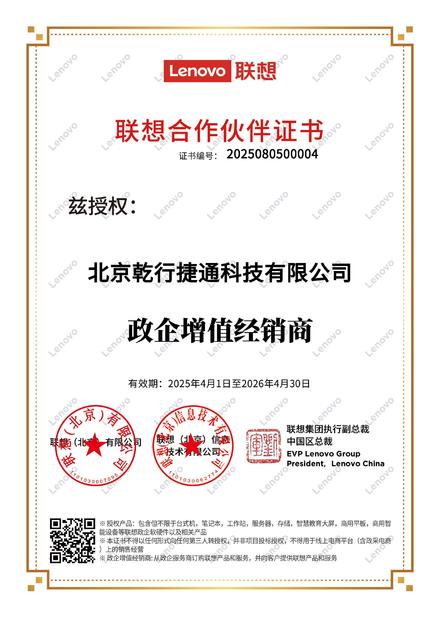
Beijing Qianxing Jietong Technology Co., Ltd.
Sandy Yang/Global Strategy Director
WhatsApp / WeChat: +86 13426366826
Email: yangyd@qianxingdata.com
Website: www.qianxingdata.com/www.storagesserver.com
Business Focus:
ICT Product Distribution/System Integration & Services/Infrastructure Solutions
With 20+ years of IT distribution experience, we partner with leading global brands to deliver reliable products and professional services.
“Using Technology to Build an Intelligent World”Your Trusted ICT Product Service Provider!
Sandy Yang/Global Strategy Director
WhatsApp / WeChat: +86 13426366826
Email: yangyd@qianxingdata.com
Website: www.qianxingdata.com/www.storagesserver.com
Business Focus:
ICT Product Distribution/System Integration & Services/Infrastructure Solutions
With 20+ years of IT distribution experience, we partner with leading global brands to deliver reliable products and professional services.
“Using Technology to Build an Intelligent World”Your Trusted ICT Product Service Provider!